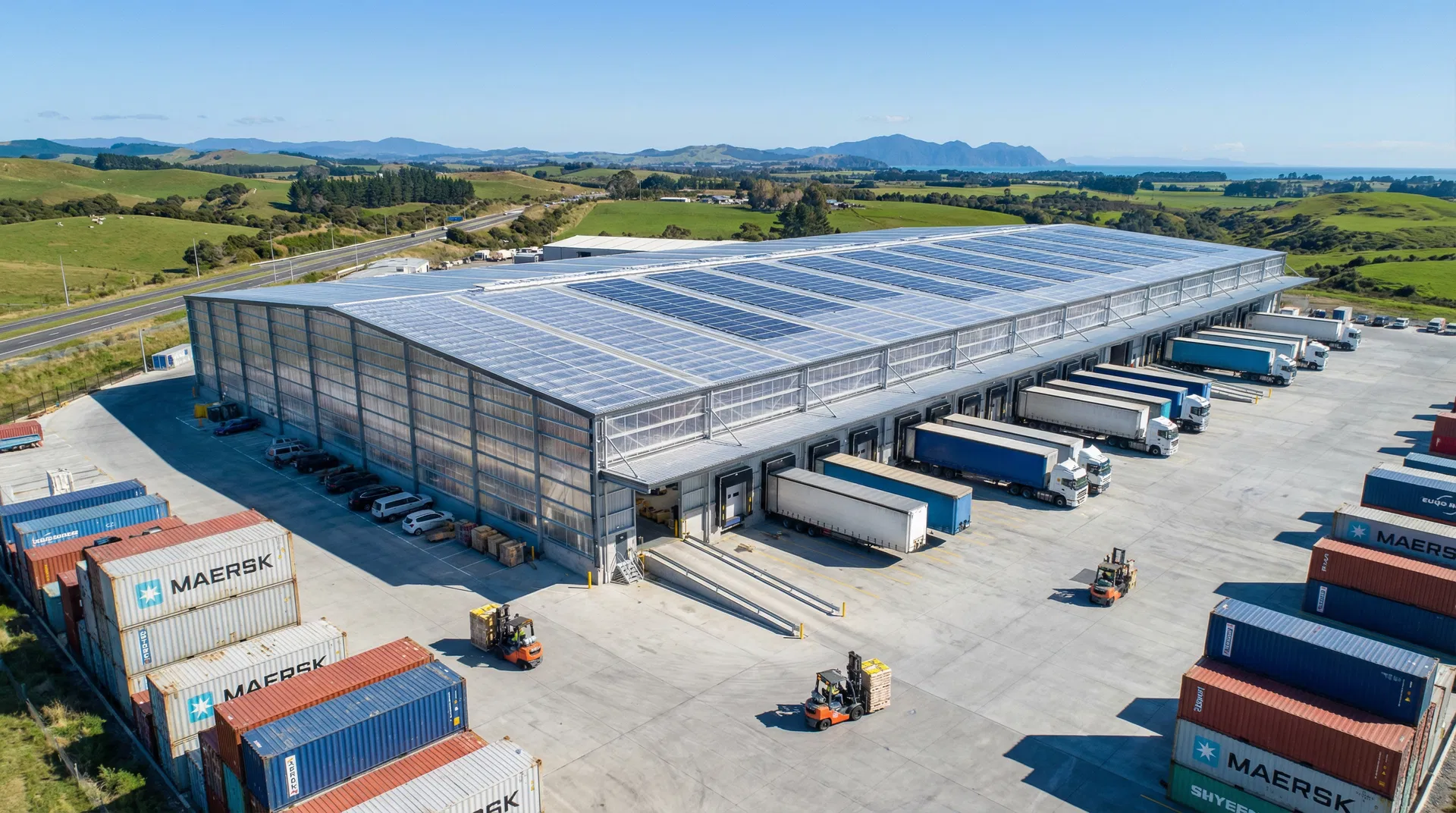

Optimizing Warehouse Logistics for Maximum Efficiency
Warehouse operations represent a significant cost center for many businesses, yet also offer substantial opportunities for efficiency improvements. Modern warehouse management combines strategic layout design, appropriate material handling equipment, inventory management systems, and process optimization to minimize costs while maximizing throughput and accuracy. This comprehensive guide explores proven strategies for warehouse optimization in New Zealand operations.
Layout Design and Space Utilization
Effective warehouse layout minimizes travel distances while maintaining safety and accessibility. ABC analysis classifies inventory by turnover—high-turnover items (A items) should be closest to shipping areas, reducing picking time. Medium and low-turnover items (B and C items) can be located further away where travel time has less impact on overall efficiency.
Vertical space utilization increases storage capacity without expanding building footprint. Modern racking systems safely store materials up to 12+ meters high, accessed by forklifts or automated storage and retrieval systems (AS/RS). Mezzanine floors add usable space for picking, packing, or office functions. Maximizing cubic utilization reduces cost per unit stored.
Material Handling Equipment Selection
Forklifts remain the workhorse of warehouse operations, but appropriate forklift selection matters. Counterbalance forklifts suit general applications with wide aisles. Reach trucks operate in narrower aisles, increasing storage density. Very narrow aisle (VNA) trucks maximize storage but require specialized racking and guidance systems.
Automated guided vehicles (AGVs) and autonomous mobile robots (AMRs) are increasingly common in high-volume operations. These systems transport materials without human operators, improving consistency and freeing workers for value-added tasks. Initial investment is substantial, but labor savings and productivity improvements often justify costs in large facilities.
Warehouse Management Systems
Modern warehouse management systems (WMS) coordinate all warehouse activities—receiving, putaway, picking, packing, and shipping. Real-time inventory tracking eliminates manual counts and reduces errors. Optimized picking routes minimize travel time. Integration with enterprise resource planning (ERP) systems ensures accurate inventory data throughout the organization.
Barcode scanning or RFID technology provides accurate, real-time inventory tracking. Workers scan items at each process step, creating an audit trail and updating inventory records instantly. This visibility enables better decision-making and reduces inventory discrepancies that plague manual systems.
Efficiency Improvements: Case Study
5000m² warehouse implemented WMS, optimized layout, and added reach trucks | Labor productivity: +35% | Inventory accuracy: 97% to 99.7% | Storage capacity: +25% | ROI: 18 months
Process Optimization
Receiving processes should verify shipments quickly and accurately, then move materials to storage without delay. Cross-docking—transferring incoming materials directly to outbound shipments—eliminates storage and picking for fast-moving items. This reduces handling costs and improves inventory turnover.
Picking strategies significantly impact productivity. Discrete picking—one order at a time—is simple but inefficient. Batch picking—multiple orders simultaneously—reduces travel time. Zone picking assigns workers to specific areas, minimizing congestion. Wave picking combines orders into optimized picking waves. The best strategy depends on order characteristics and facility layout.
Safety and Ergonomics
Warehouse safety protects workers and reduces costs from injuries and damage. Proper forklift training, pedestrian separation, and appropriate personal protective equipment are fundamental. Regular safety audits identify hazards before accidents occur. Strong safety culture—where workers feel empowered to report hazards and stop unsafe work—is essential.
Ergonomic design reduces worker fatigue and injury. Adjustable-height workstations accommodate different workers. Mechanical assists—lift tables, tilters, and manipulators—reduce manual lifting. Proper lighting and climate control maintain comfortable working conditions. These investments improve productivity while reducing injury costs.
Continuous Improvement
Warehouse optimization is ongoing, not a one-time project. Key performance indicators (KPIs)—order accuracy, picking productivity, inventory turnover, and dock-to-stock time—track performance and identify improvement opportunities. Regular process reviews engage workers in problem-solving, leveraging their frontline knowledge.
Lean principles eliminate waste in warehouse processes. Value stream mapping identifies non-value-added activities. 5S methodology organizes workspaces for efficiency. Kaizen events tackle specific problems with focused improvement efforts. This continuous improvement mindset drives ongoing performance gains.
Hadid Group's Warehouse Solutions
Hadid Group supplies racking systems, mezzanines, and structural components for warehouse facilities. We understand the unique requirements of modern warehouse operations and can advise on appropriate solutions for your facility. Our team works with warehouse designers and equipment suppliers to ensure integrated solutions that optimize your operations.