Seismic Resilience in Industrial Facility Design
New Zealand's location on the boundary of the Pacific and Australian tectonic plates makes earthquake resilience a critical consideration for all structures. Industrial facilities face unique challenges—heavy equipment, hazardous materials, and critical production processes demand higher performance standards than typical buildings. This article explores strategies for designing seismically resilient industrial facilities that protect people, equipment, and business continuity.
Understanding Seismic Hazards
Earthquakes generate ground shaking that subjects structures to complex, rapidly changing forces. Buildings must resist both horizontal and vertical accelerations while accommodating ground displacement. The intensity of shaking depends on earthquake magnitude, distance from the epicenter, local soil conditions, and building characteristics.
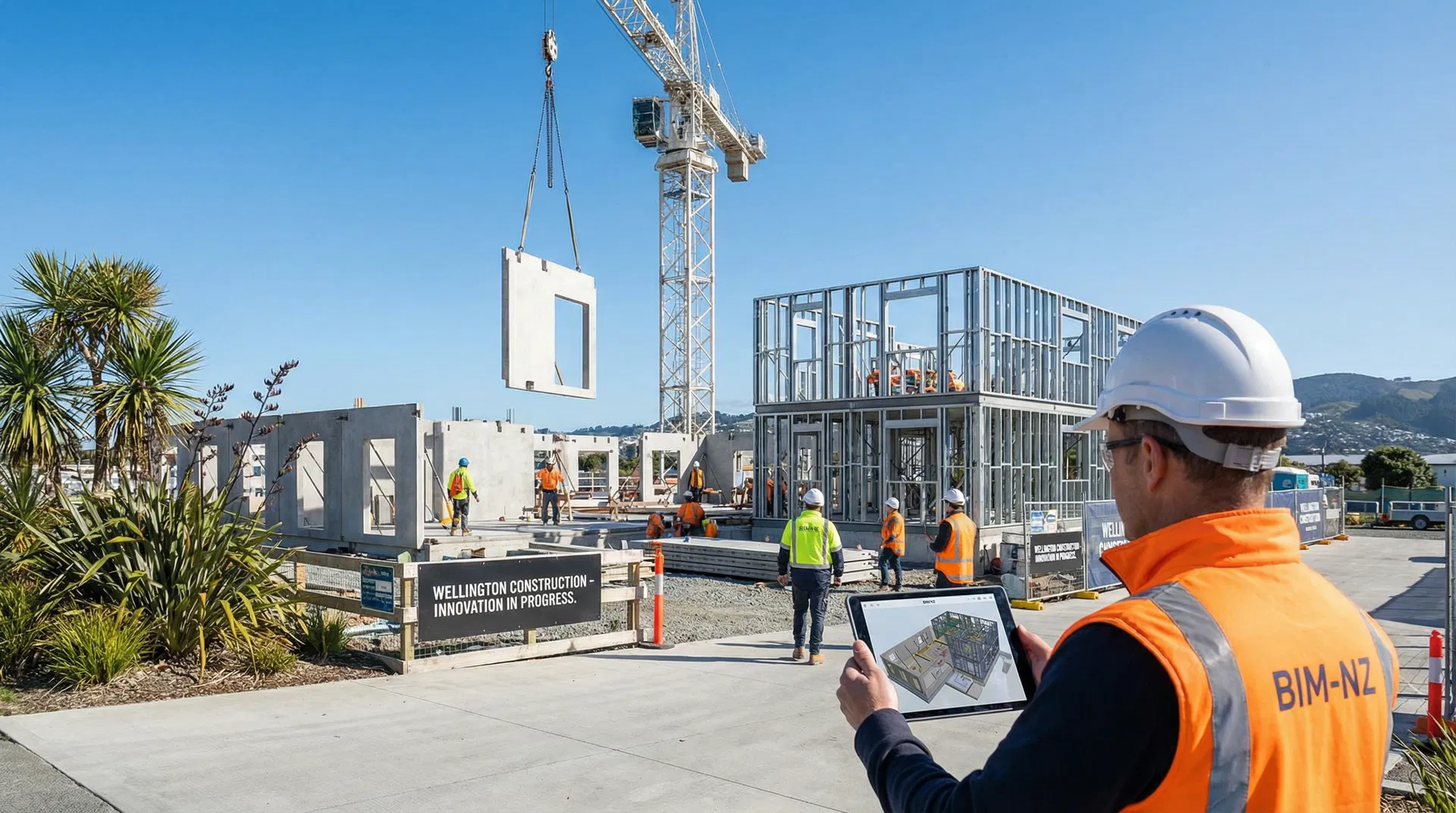
New Zealand uses a risk-based approach to seismic design, with requirements varying by location and building importance. High-risk zones like Wellington and Christchurch demand more rigorous design than lower-risk areas. Industrial facilities often qualify as "importance level 3" structures due to hazardous contents or economic significance, requiring enhanced performance standards.
Structural Systems for Seismic Resistance
Ductile steel framing is preferred for seismically resistant industrial structures. Steel's high strength-to-weight ratio reduces seismic forces, while its ductility allows controlled yielding that dissipates earthquake energy. Moment-resisting frames, braced frames, and combinations thereof provide lateral resistance while accommodating large open spaces required for industrial operations.
Base isolation represents advanced seismic protection, inserting flexible bearings between the structure and foundation. These bearings allow the ground to move independently of the building, dramatically reducing forces transmitted to the structure. While expensive, base isolation is cost-effective for facilities with sensitive equipment or hazardous processes where damage consequences are severe.
Non-Structural Elements
Non-structural elements—cladding, ceilings, partitions, piping, and equipment—often cause more damage and business interruption than structural damage. These components must be properly braced and detailed to accommodate building movement without failure. Equipment anchorage is particularly critical in industrial facilities, where heavy machinery can become dangerous projectiles during earthquakes.
Piping systems require flexible connections and adequate clearances to accommodate differential movement between equipment and structure. Rigid piping will fracture during earthquakes, potentially releasing hazardous materials or disrupting critical processes. Seismic joints, flexible couplings, and proper support spacing ensure piping system integrity.
Performance Objectives
Operational: Facility remains operational with minimal damage | Immediate Occupancy: Safe to occupy immediately after earthquake | Life Safety: Prevents collapse and serious injury | Collapse Prevention: Minimum code requirement
Business Continuity Considerations
Beyond life safety, industrial facilities must consider business continuity. Production downtime following earthquakes can have severe financial consequences. Enhanced seismic design—exceeding minimum code requirements—reduces damage and accelerates recovery. This investment is often justified by avoided business interruption losses.
Redundancy in critical systems provides resilience. Backup power generation, redundant process equipment, and diversified supply chains ensure operations can continue or quickly resume after earthquakes. Emergency response planning—including damage assessment procedures and repair contractor agreements—accelerates recovery.
Retrofit of Existing Facilities
Many existing industrial facilities were designed to older, less stringent seismic standards. Seismic assessment identifies vulnerabilities and quantifies earthquake performance. Retrofit strategies—adding bracing, strengthening connections, or installing supplemental damping—improve performance to acceptable levels.
Retrofit timing often coincides with facility expansions or process upgrades, leveraging planned downtime and spreading costs across multiple projects. Incremental retrofit—addressing highest-risk elements first—provides immediate risk reduction while deferring less critical work.
Hadid Group's Seismic Engineering Support
Hadid Group works with experienced structural engineers specializing in seismic design. We supply materials meeting New Zealand seismic design requirements and can advise on appropriate structural systems for your facility. Our technical team understands the unique challenges of industrial seismic design and can support your project from concept through completion.